
A new Pew Research Center report finds America's youngest adults are in worship services more than the country as a whole, while fewer of them pray every day. Baptism and Sunday are the start. Here's how to keep growing Monday through Saturday.
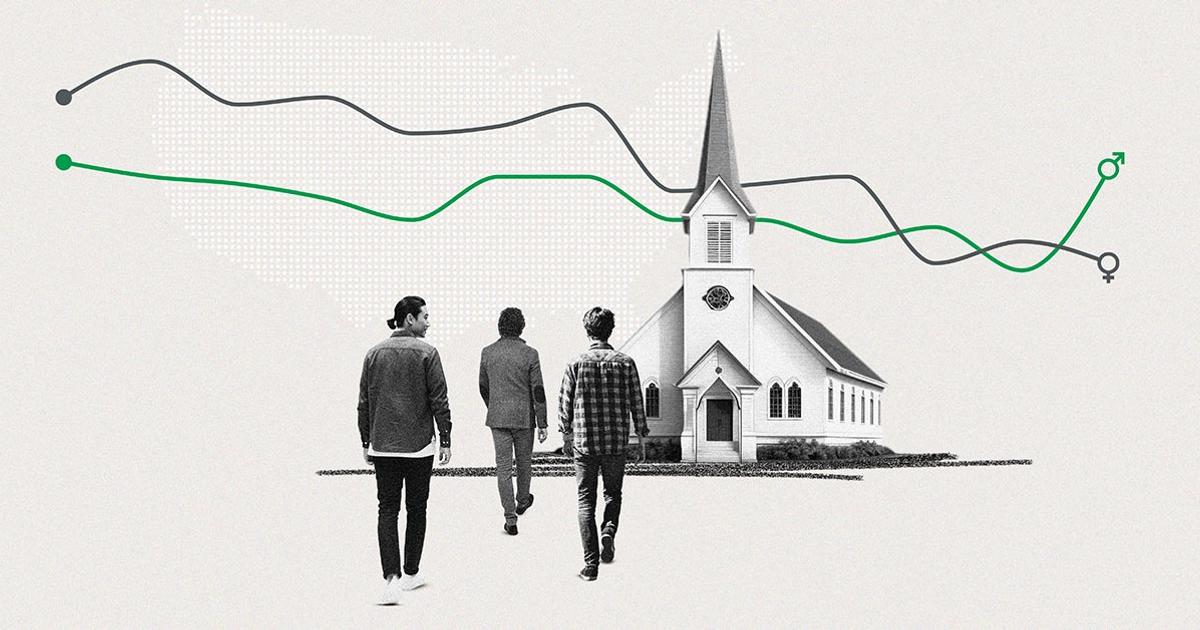
Young adults are walking into church. Pew Research Center's new report, released Wednesday, Oct. 28, found that 41% of adults ages 18 to 22 say they attend religious services at least monthly. Across all U.S. adults, it's 33%.
Fewer of them are praying every day. Just 34% of those 18 to 22 year olds say they pray daily, compared with 46% of all U.S. adults. That gap between Sunday and the rest of the week is the "what now" moment every new believer faces after the baptism photos are posted.
Article Summary
- Pew Research Center released "Religion Remains Stable in the U.S., With Mixed Signals for Young Adults" on Oct. 28, 2026, drawing on its 2025 and 2026 national surveys.
- 41% of adults ages 18 to 22 attend religious services at least monthly, compared with 33% of all U.S. adults (Pew).
- 34% of the same age group pray daily, compared with 46% of all U.S. adults (Pew).
- Adults ages 23 to 26 are the least religious age group on prayer, importance of religion, and religious identity (Pew).
- Pew senior researcher Chip Rotolo called the youngest group's attendance "pretty remarkably high" and urged caution, since the group is small (RNS via The Baptist Paper).
- Showing up is the start. Daily prayer, Scripture, and real friendships are what help it last.
| Measure | Ages 18 to 22 | All U.S. adults |
|---|---|---|
| Attend religious services at least monthly | 41% | 33% |
| Pray daily | 34% | 46% |
Pew Research Center, Oct. 28, 2026. Adults ages 18 to 22 were born 2004 to 2008.
What Pew found
Pew's researchers combined surveys from 2025 and 2026 and split young adults into two groups. The youngest, born 2004 to 2008, are now roughly 18 to 22. The next group, born 2000 to 2003, are roughly 23 to 26.
The youngest group's 41% monthly attendance is higher than every age group born from the 1960s through the 1990s, Pew reports. Religion News Service noted that only Americans born before 1950 (43%) report a higher rate. Chip Rotolo, a senior researcher on Pew's religion team, told RNS the number is "pretty remarkably high."
He was just as clear about the limits. The surveys included 443 respondents born between 2004 and 2008, and Pew puts the margin of error for that group at plus or minus 5.7 percentage points.
There's definitely no signs that today's young adults are way more religious or really any more religious than young people of the same age a decade or more ago.
Chip Rotolo, Pew Research Center (via Religion News Service)
Among 18 to 22 year olds, 47% of men attend at least monthly, compared with 35% of women. Pew adds that the youngest women also attend at fairly high rates compared with women born in the 1990s and early 2000s.
The gap is the after-baptism gap
41% at worship services at least once a month. 34% praying every day. Every pastor who has baptized someone knows that space.
A baptism is a beautiful start. So is a first Sunday back. Then Monday comes, and a new believer has questions, old habits, and a phone full of other voices.
Pew also gives a caution worth hearing. When surveys have shown the youngest adults entering adulthood with high religiousness in the past, "the religiousness of the youngest adults has tended to fade with time." Pew says there's no way to know yet whether this group will follow that pattern or break it.
The next group up shows what's at stake. Adults ages 23 to 26 are the least religious age group on daily prayer (26%), calling religion very important (27%), and identifying with a religion (50%). Their monthly attendance is 27%, among the lowest of any age group (Pew). Rotolo told RNS the youngest adults may be "still more likely to be living at home or carrying some of the values they were raised with." The move out of the house is when faith needs friends.
Jesus told His followers to make disciples, "baptizing them" and "teaching them to observe all things that I commanded you" (Matthew 28:19-20, WEB). Baptism and teaching go together.
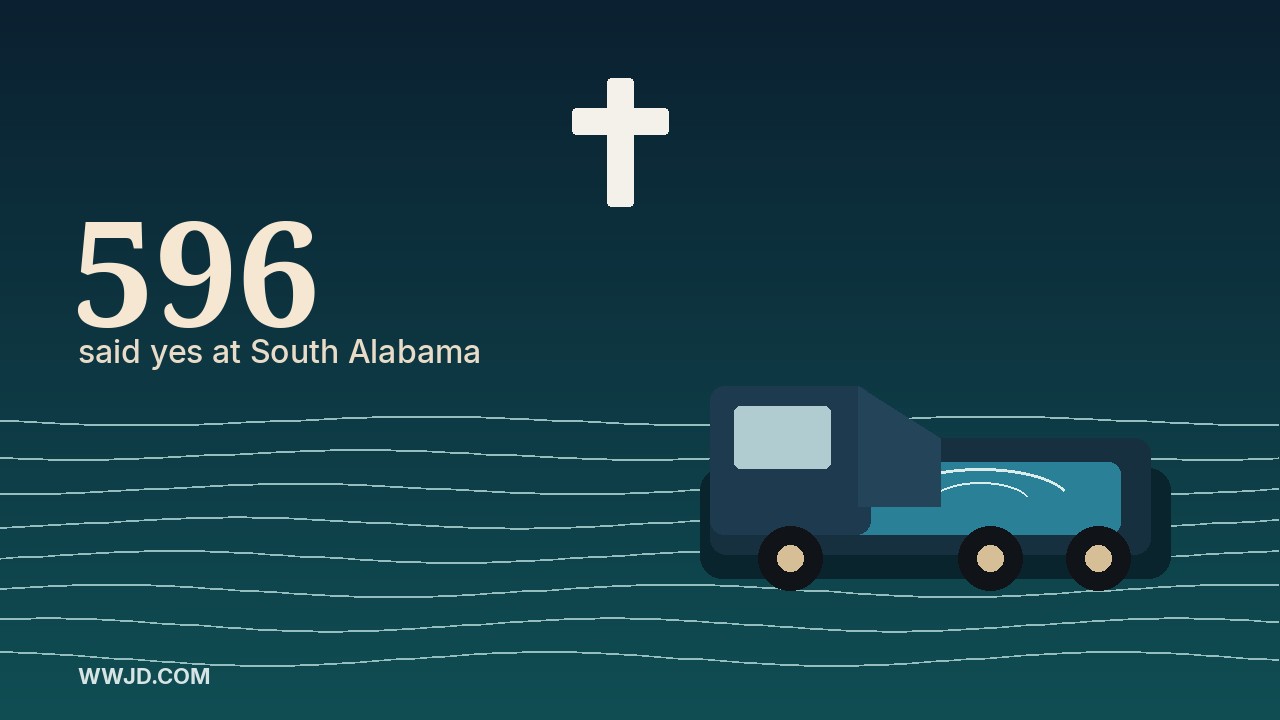
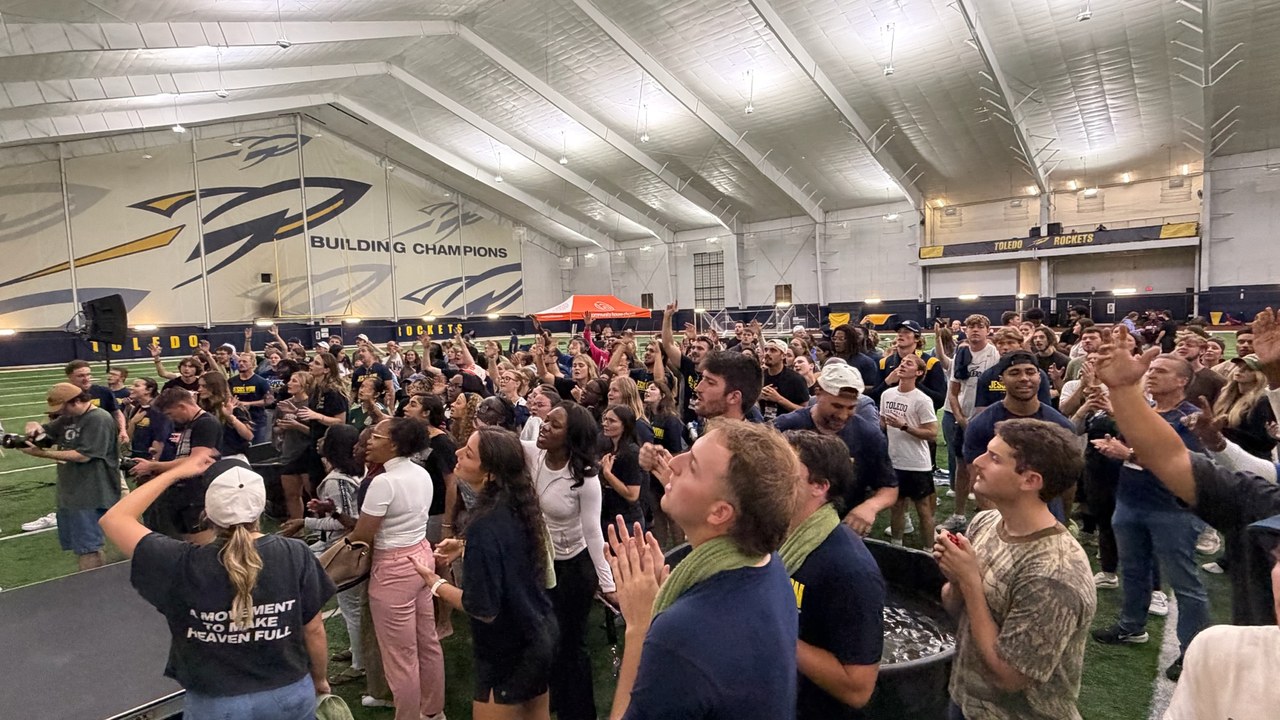
On Oct. 27 at the University of South Alabama in Mobile, Pathway Church pastor Travis Johnson baptized a student named Emily in the back of a pickup truck. Then he asked the students around him, "Is there anybody here that will walk with Emily all the way to the finish line?" (Charisma). Read who will walk with Emily. Pew's numbers ask the same question of every church.
PRO TIP Ten honest minutes beats one long prayer a month. Tell God what you're thankful for, what you're worried about, and who you're praying for.
What helps a new believer keep growing
The first church in Acts gives a simple pattern. The new believers "continued steadfastly in the apostles' teaching and fellowship, in the breaking of bread, and prayer" (Acts 2:42, WEB). Here's how that can look this week.
Start in John
If you're new to the Bible, read the Gospel of John, one chapter a day. You'll meet Jesus in His own words.
Pray a little every day
Tell God what you're thankful for, what you're worried about, and who you're praying for.
Find one friend who will ask how you're doing
Someone a step ahead who will text you, pray with you, and sit with you on Sunday.
Keep it small
One chapter, one prayer, one conversation. Habits you can keep will carry you further than a plan that wears you out by Thursday.
Obey out of love
Jesus said, "If you love me, keep my commandments" (John 14:15, WEB). Following Him grows out of knowing Him.
Tell your story
Your baptism might be the reason a friend comes next time.
PRO TIP If you just got baptized, text one person today: "Will you check on me once a week for the next month?" Then put a weekly reminder on your phone to text them back.
How the WWJD.COM SuperApp helps with the "what now"
WWJD Global Outreach is a faith tech ministry. Our mission is to reach the world with the Gospel of Jesus Christ, with an emphasis on discipleship in Scripture and growing in faith through family and community. Faith Is Rising tells the stories of what God is doing, from campus baptisms to full stadiums. The WWJD.COM SuperApp is built for the weeks after: for new Christians, families, and church communities who want to keep growing Monday through Saturday.
Here's what's in the app today:
- Daily devotionals, personalized by age and faith stage, with audio narration and a streak to help you stay consistent.
- Prayer Companion, with guided prayer, Scripture suggestions, journaling, and a way to track answered prayers.
- Heart Compass, a check-in on how you're feeling that gives you Scripture and prayer for that moment.
- Bible reading plans to read, search, and study, with progress tracking.
- Growth tracks, discipleship paths that move from inspiration to everyday obedience.
- Community, private, invite-only groups for small groups, churches, and accountability, with prayer requests, discussions, events, polls, and moderation.
- Family Hub, with up to 5 profiles per household, child-safe PIN mode, shared prayer, and daily family questions.
- Near You, to find churches and groups nearby by location, city, or ZIP code.
- Next steps, where the app suggests a lesson, devotional, Bible chapter, or podcast when you finish something.
Have a story of how Jesus changed your life? You can share your testimony on WWJD.COM. A person reads every story before anything is published.
The app works best alongside a local church and real friends. It helps you pray on a Tuesday, read the next chapter, and stay close to your group until Sunday comes again.
Download on the App Store · Get it on Google Play · Open the web app.
What Would Jesus Do next?
Jesus didn't stop at the crowd. He called people by name, ate with them, and taught them along the road.
So if young adults are walking into your church, walk toward them. Learn their names, invite them to a meal, and pray with them during the week.
And if you just said yes to Jesus, keep coming back. Open John tomorrow morning. Ask someone to check on you. Find your people and grow with them.
Pray for the 18 to 22 year olds in your church, and for the 23 to 26 year olds who aren't there yet.
What you can do now
- Learn the name of one young adult or new believer at your church this Sunday.
- Offer to check on them once a week for a month.
- Read the Gospel of John together, one chapter a day.
- Ask the question before your next choice: What would Jesus do?
FAQ
What did the Pew report find about young adults?
41% of U.S. adults ages 18 to 22 say they attend religious services at least monthly, compared with 33% of all U.S. adults. But 34% of that group pray daily, compared with 46% of all adults (Pew Research Center, Oct. 28, 2026).
Is Gen Z more religious than past generations?
Pew researcher Chip Rotolo said there are "no signs" today's young adults are more religious than young people of the same age a decade or more ago (RNS). Pew says it's too soon to know whether today's numbers are a turning point.
Does the 41% count only Christians?
No. Pew asked about attending services at "a church, synagogue, mosque or other house of worship."
How many young adults did Pew survey?
443 respondents born between 2004 and 2008, with a margin of error of plus or minus 5.7 percentage points (Pew).
I just got baptized. What should I do first?
Find a local church to call home, start reading the Gospel of John, pray every day, and ask one friend to check on you weekly. The free WWJD.COM SuperApp has daily devotionals, guided prayer, growth tracks, and private community groups to help you keep going.
Who is the WWJD.COM SuperApp for?
New Christians, families, and church communities. It's free on iPhone, iPad, Android, and the web.
Sources
- Pew Research Center: Religion Remains Stable in the U.S., With Mixed Signals for Young Adults (Gregory A. Smith, Chip Rotolo, and Alan Cooperman, Oct. 28, 2026)
- Pew Research Center, Methodology (Oct. 28, 2026)
- Religion News Service via The Baptist Paper, "Youngest adults outpace parents' generation in worship attendance, report says" (Oct. 28, 2026)
- Charisma, James Lasher, "A Gen Z Revival? 5 Surprising Findings From Pew's New Religion Report" (Oct. 29, 2026)
- Charisma, Abby Trivett, "Pastor Travis Johnson Shares Incredible Baptism Moment at Alabama College Revival" (Oct. 28, 2026)
- WWJD News: Who Will Walk With Emily? (Oct. 30, 2026)
- WWJD.COM SuperApp on the App Store
- WWJD.COM home page
- WWJD.COM: Share Your Story
- World English Bible: Matthew 28:19-20; Acts 2:42; John 14:15
- WWJD.COM: Faith Is Rising
- WWJD.COM: Statement of Faith
Ask the Question - Live the Answer